Hans-Peter Schütt – Anima(l) encounters
9.1.-1.2.2026 | Galleria Ars Libera
ke-pe 14-18, la-su 12-17
vapaa pääsy, tervetuloa!
Tervetuloa näyttelyn avajaisiin to 8.1. klo 18-20!
Taiteilija tavattavissa su 1.2. klo 15-17.
Anima(l) encounters
On asioita, joita on vaikea uskoa. Vielä 1850 tienoilla tiedemaailman oli vaikea uskoa, että jonkin lajin katoaminen voisi johtua ihmisen toiminnasta. 2025 on vaikea uskoa, että nykyinen hallitus sallii turkistarhauksen jatkuvan ja tukee sitä kymmenillä miljoonilla. Jos minulle olisi etukäteen kerrottu, että jalkojeni juuressa vääntelehtivä surkea kymmensenttinen mytty tulee synnyttämään tsunamin kauhua ja horjuttamaan maailmani perustuksia, olisi sitäkin ollut vaikea uskoa. Näyttely käsittelee näitä asioita tuntemattomuudesta käsin ja kohtaamiseen liittyvien ajatusten keinoin.
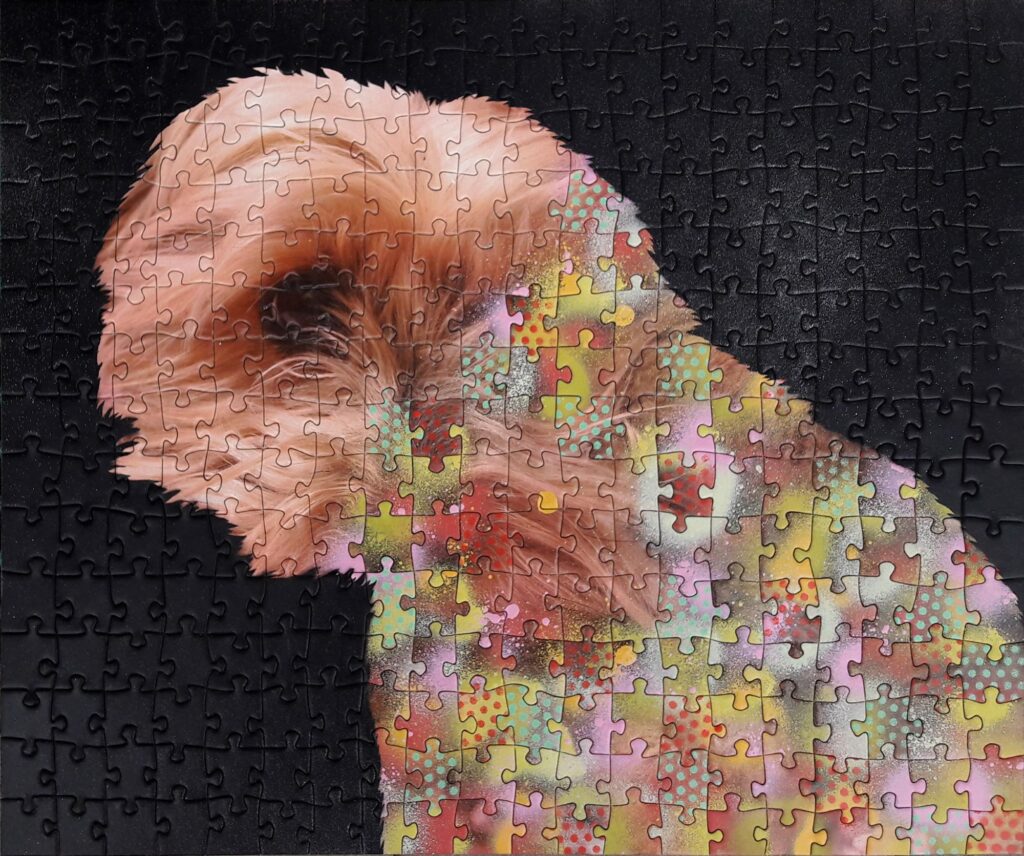
Teoksissa esiintyvät olennot eivät taivu tunnistamiseen, tieto tai äly ei läpivalaise niitä. Niissä on tuttua ja vierasta, kuten meissä asuvissa esi-isissä, ”eläinolioissa”, joista emme yhtäältä pääse eroon ja joihin emme toisaalta enää löydä reittiä. Tuntemattomina, kieltä ja nimiä paetessaan, näitä olentoja voi katsoa Maurice Merleau-Pontyn sanoin”paluuna olioihin sinänsä, eli maailmaan, joka on olemassa ennen tietoa”.
Meille näkökeskeisille katse on selkein tapa havaita toinen tietoisuus. Muotokuvien eläinoletetut olennot katsovat takaisin, joten niiden kanssa voi harjoitella kohtaamista. Pohjustukseksi siihen tämä Yuriko Saiton ajatus: ”Perimmäinen, moraalisestikin tärkeä edellytys minkä hyvänsä kohteen tajuamiseksi oikeudenmukaisella tavalla, toisin sanoen sen omin ehdoin, on tunnistaa tarina, jonka toinen meille kertoo, ja kuunnella sitä myötäeläen, vaikka se olisi meistä hyvinkin outo.”
Olentojen kirjo ja kovin erilaiset tavat olla maailmassa takaavat tarinoiden moninaisuuden. Saito korostaa herkkyyttä, kärsivällisyyttä ja asettumista toisen asemaan mielikuvituksen keinoin niiden kuulemiseksi. Sen ohella outouden voi kohdata yhtäläisyyksien kautta. Minä ja kaikki muut elävät, tarvitsemme elinkelpoisen ympäristön, puhdasta ravintoa, vettä ja suojaa. Toivomme ja tavoitteemme on kasvu ja kehitys, vuorovaikutus, turva sekä kivun ja tarpeettomien konfliktien välttäminen. Miten nämä samankaltaisuudet tai Saiton ajatus istuvat ihmislajin planetaariseen valta-asemaan? Minkälaisia ovat ne ideat, rakenteet, järjestelmät tai toimiemme lukemattomat sivuvaikutukset, joissa muunlajiset joutuvat kohtaamaan meidät? Miltä ne tuntuvat? Mikä on tarina, jota me kerromme ja miten oudolta se kuulostaa?
Lainaan vastauksen Doris Lessingltä:”Ihmisiä ovat aina tarkkailleet luontokappaleet, joiden havainnot ja ymmärrys maailmasta ovat olleet suuresti edellä siitä, mitä me olemme kyenneet hyväksymään tai kieltäytyneet havaitsemaan turhamaisuutemme sekä itserakkautemme takia. Jos pystyisimme käsittämään kaiken älykkyyden, tunteet ja kyvyt, jotka olemme kulkiessamme talloneet, syöksyisimme hulluuteen. Se olisi äärimmäinen nöyryytys; häpeä, johon kuollaan.” Käärimme oman tarinamme sivistykseen, katsomatta varjoihin, joita se langettaa muiden ylle.
Suren ahneuden, julmuuden ja välinpitämättömyden takia kärsiviä. Muistan kadonneita ja huudan niiden puolesta, jotka ovat katoamisen uhkaamia. Iloitsen ajatuksesta möyriä evoluution portaita alaspäin ja sulautua yhä useampaan sukulaiseeni. Muistutan, että mahdollisuudet kohdata ja rakentaa uudenlaisia eheämpiä ja huomioonottavampia yhteyksiä luontoon ja ympäristöön eivät sijaitse täällä, vaan ulkomaailmassa, oikeiden elävien parissa. Kiitän Taiteen edistämiskeskusta
työskentelyni tukemisesta.
Hans-Peter Schütt on Tampereella ja Turussa työskentelevä monialainen kuvataiteilija, jonka ilmaisukeinot määrittyvät projektikohtaisesti teosten sisällön, toteutusmahdollisuuksien ja -vaatimusten sekä esityspaikan mukaan. Schüttin taide keskittyy ympäristökysymyksiin aiheenaan eläin-, maisema-, kulutustottumus- ja resurssikysymykset. Schütt käyttää teoksissaan usein kierrätettyjä tai ylijäämämateriaaleja. Hänen teoksiaan on mm. Jenny ja Antti Wihurin säätiön sekä Helsingin taidemuseon kokoelmissa, ja julkista taidetta mm. Turussa, Keravalla ja Keuruulla.
Hans-Peter Schütt – Anima(l) encounters
9.1.-1.2.2026 | Gallery Ars Libera
wed-fri 14-18, sat-sun 12-17
Free Entry, Welcome!
Welcome to the exhibition opening on Thu 8th January at 6 pm!
Meet the Artist on Sun 1st February from 3 to 5 pm.
Anima(l) encounters
There are things that are hard to believe. As recently as 1850, the scientific world found it hard to believe that the disappearance of a species could be caused by human activity. In 2025 it is hard to believe that the current government allows fur farming to continue and supports it with tens of millions. If I had been told in advance that the miserable ten-cent lump writhing at my feet would create tsunami-sized terror and shake the foundations of my world, it would have been hard to believe. The exhibition deals with these issues with ideas of the unknown and encountering.
The creatures in the works do not lend themselves to recognition, knowledge or intelligence do not illuminate them. They contain the familiar and the strange like the ”animal” ancestors living within us. The one which we cannot on the one hand get rid of and to which we cannot on the other hand return to. While escaping language and names, these unknown beings can be seen, in the words of Maurice Merleau-Ponty, as “a return to things in themselves, that is, to a world that exists before knowledge”.
For us, who are focused on sight, the gaze is the clearest way to perceive another consciousness. The supposed animal beings in the portraits look back and that quality allows us to practice the idea of encountering. For assistance, here is Yuriko Saito’s thought: “The ultimate, morally important condition for perceiving any object in a fair way, in other words on its own terms, is to recognize the story that another tells us, and to listen to it with empathy, even if it is very strange to us.”
The range of beings and the very different ways of being in the world guarantee the diversity of the stories. Saito emphasizes sensitivity, patience and imagining oneself in the place of the other in order to hear them. Strangeness can also be encountered by focusing rather on similarities than differences. I and all other living things need a livable environment, clean food, water and shelter. Common hopes and goals are growth and development, interaction, security and the avoidance of pain and unnecessary conflict.
How do these similarities or Saito’s idea fit into the role of humans as planetary dominants? What are the ideas, structures, systems or countless side effects of our actions in which other species meet us? What do they feel like? What is our story, the one we tell to others and how strange does it sound?
I quote the answer from Doris Lessing: “Humans have always been watched by creatures whose observations and understanding of the world have been far ahead of what we have been able to accept or refused to perceive because of our vanity and our self-love. If we could comprehend all the intelligence, emotions and abilities that we have trampled on in our path, we would plunge into madness. That would be the ultimate humiliation; a shame that one dies of.” We wrap our own story in civilization, ignoring the shadows it casts over others.
I mourn those who suffer because of greed, cruelty, and indifference. I remember the ones who are already gone and cry out for those who are threatened with extinction. I rejoice in the thought of tumbling down the evolutionary ladder and merging with more and more of my relatives. I would like to remind that the opportunities to encounter and build new, more wholesome and considerate connections to nature and the environment do not lie here, but in the outside world, among real living beings. I thank the Arts Promotion Centre Finland for supporting my work.
Hans-Peter Schütt is a multidisciplinary visual artist working in Tampere and Turku. His means of expression are determined by the content of the works, the possibilities and requirements for implementation and the place where the final piece is placed. His art focuses on environmental issues with subjects such as animals, landscapes, habits of consumption and questions of resources. Among others, his works are included in the collections of Jenny and Antti Wihuri Foundation and Helsinki Art Museum and he have made public art in Turku, Kerava, and Keuruu.